How to Plan the Perfect Kitchen Layout for Any Space
I always say to my interior design clients that kitchens are the trickiest rooms to get right from a layout perspective. There are so many things to consider with a new kitchen and it's a bit like doing a jigsaw, moving things around until you find the perfect configuration for your space. In this blog post, I'm going to talk you through the steps I follow when working on a kitchen design, with lots of examples of different shaped kitchens, important things to consider and design tips to help you plan your kitchen layout with confidence.
Draw out your room plan
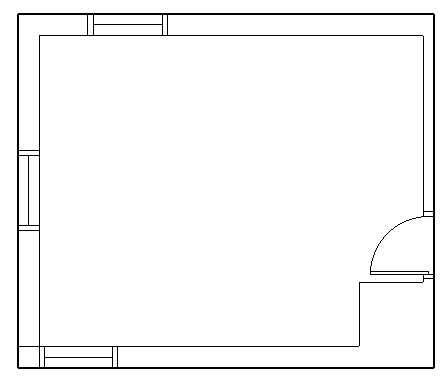
The first step is to roughly sketch out and then measure your room, taking into account things like window and door locations. When you've got all the measurements, you'll need to create a to-scale floor plan of the space. There are a lot of different online software programmes available to help you do this - I use Sketchup and I've also had a play around with Homestyler which was really easy to use. If the idea of using online software fills you with dread though, you could always draw out your kitchen floor plan by hand, using a scaled ruler. This is what I did for all of our house's room designs before I started my design business. I'd recommend making several photocopies of the plan and then cutting out to-scale shapes to represent each item, making it easy to play around with different layouts.
Make sure you consider the whole space
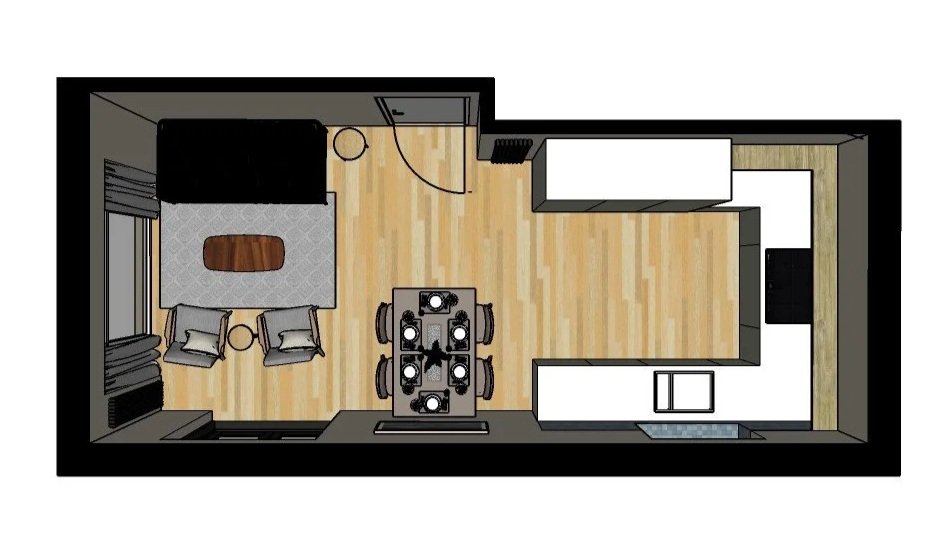
Before you start on the actual kitchen design, it's really important to consider the entire space and your unique needs. Will you be incorporating a dining area? And maybe a sitting zone? How many people do you need to be able to seat in each zone at one time? Once you've thought about how you'll use the space, you'll have a rough idea of how much room you'll need for each zone and how much is available for the kitchen area.
Also consider whether you can make any room layout changes so that your kitchen design works better for you. Our kitchen-diner originally had two doorways leading to the same hallway. We blocked one up which gave us a much easier floor plan to work with when designing the kitchen. Sometimes just moving a door along slightly can give you extra useable space. Little changes like this can make all the difference.
The Basic Kitchen Layouts
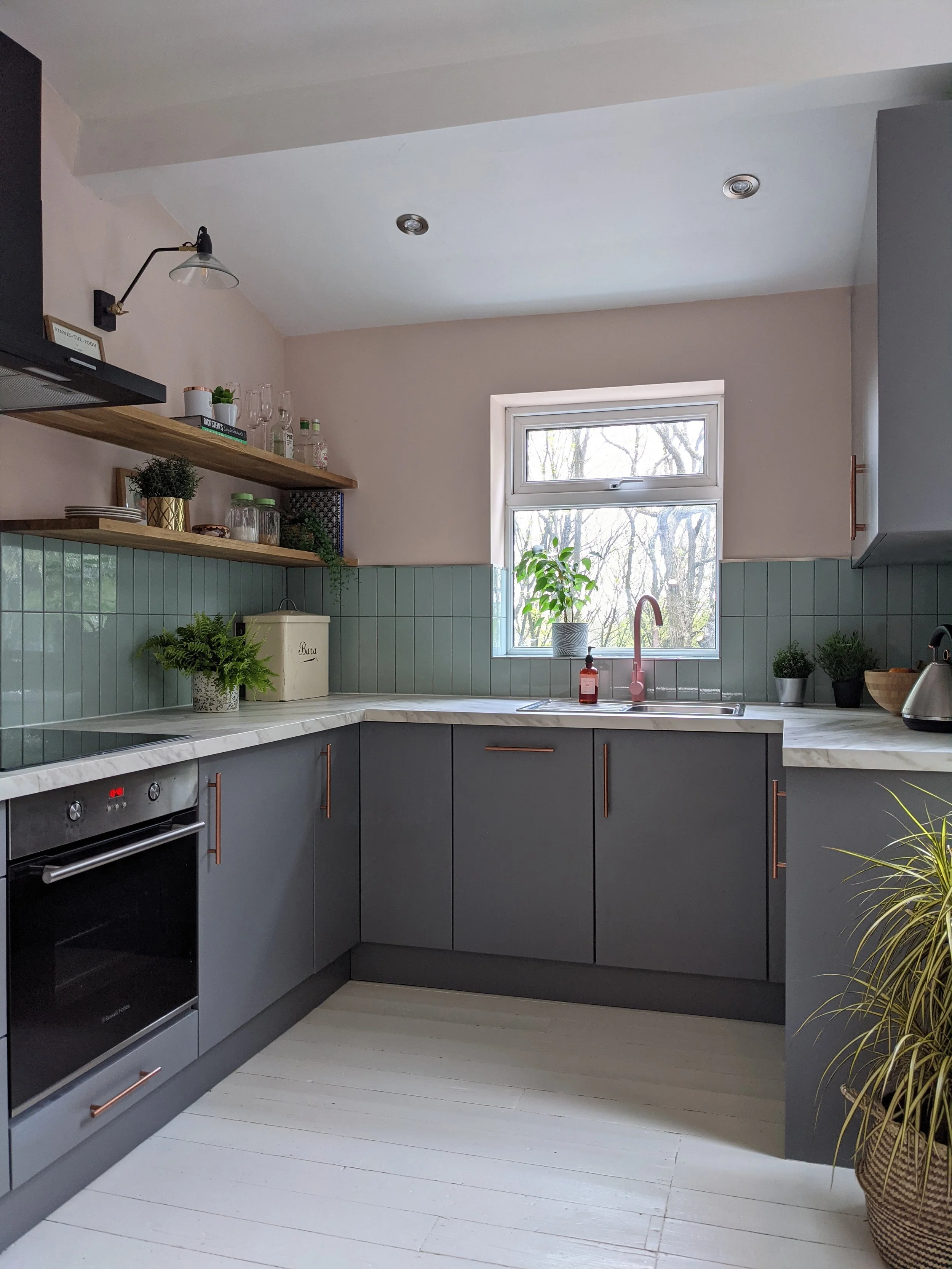
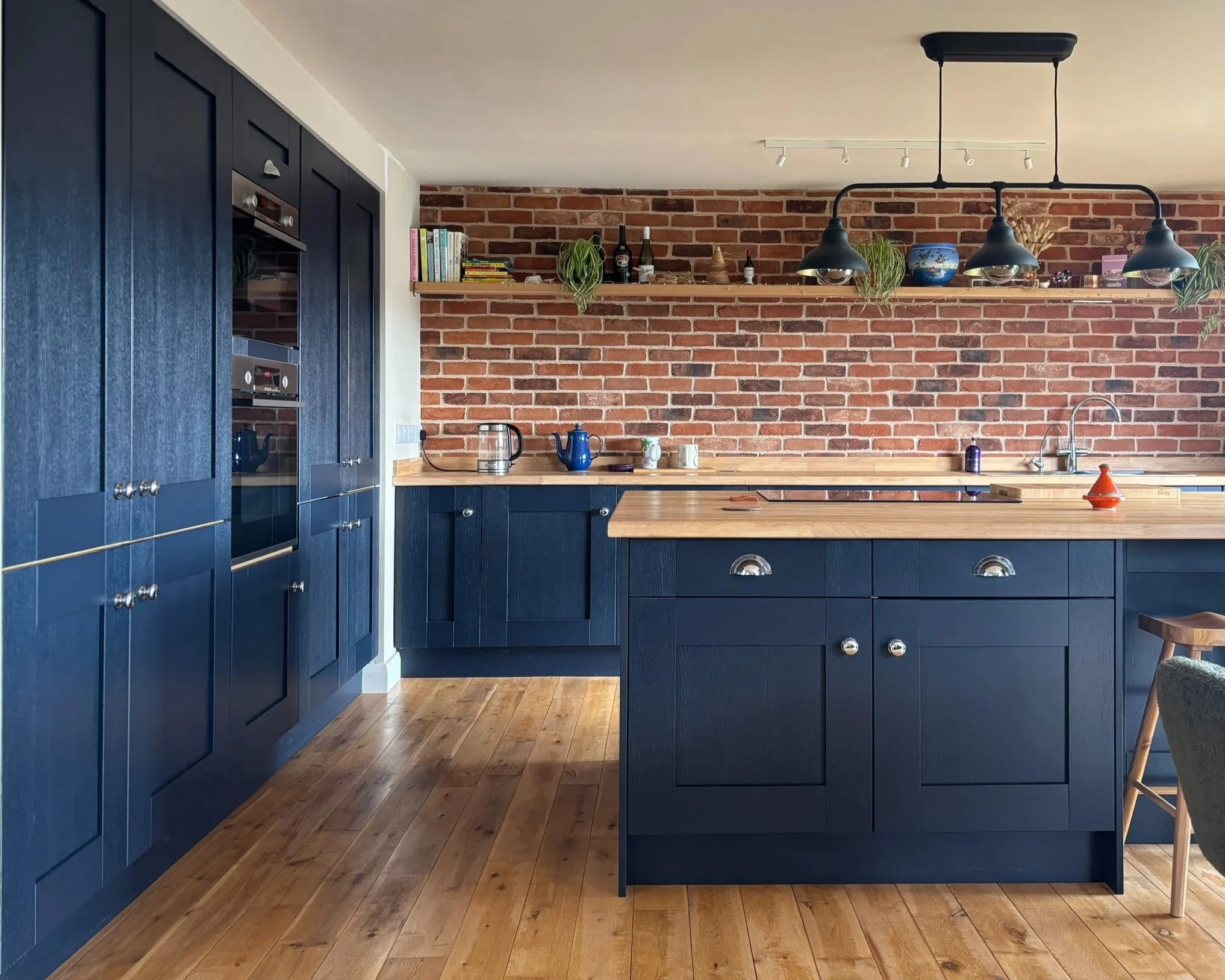
The kitchen at my Edwardian terrace project
U-shaped layout - Great for maximising space in small kitchens, U-shaped designs allow for lots of valuable counter space.
L-shaped kitchen layout - one of the most popular kitchen layouts, an L-shaped kitchen design comprises of two rows of kitchen cabinets on adjacent walls. This functional layout works well in all sizes of kitchen and creates an open feel.
Galley layout - Two worktop runs along two parallel walls. Most suitable for a long, narrow space.
All of the above layouts can of course include an island or peninsula if you have enough space.
Kitchen Islands and Peninsulas
Is there enough space for an island?
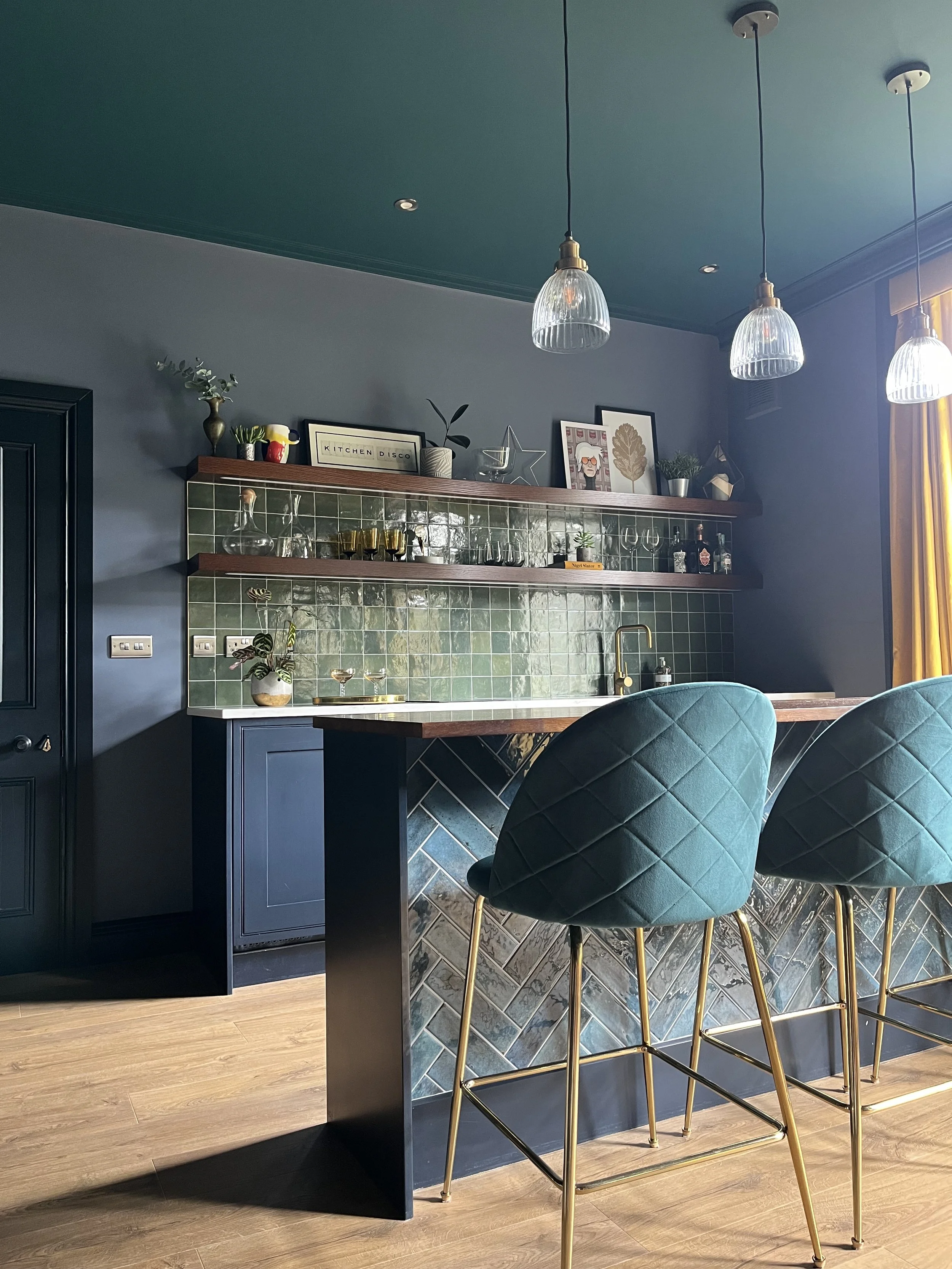
The bar at my Halifax family basement project
One of the main requirements for kitchens these days is a large island but not all spaces are big enough. I've seen people squeeze in a really small island but they end up looking a bit silly. The best size for an island really depends on the size of your kitchen but I generally recommend 120cm as the absolute minimum width. Islands with a depth of 60cm can work in smaller spaces if you're only using it for prep (rather than for a hob/sink) but they look much better and are more functional with a minimum depth of 90cm.
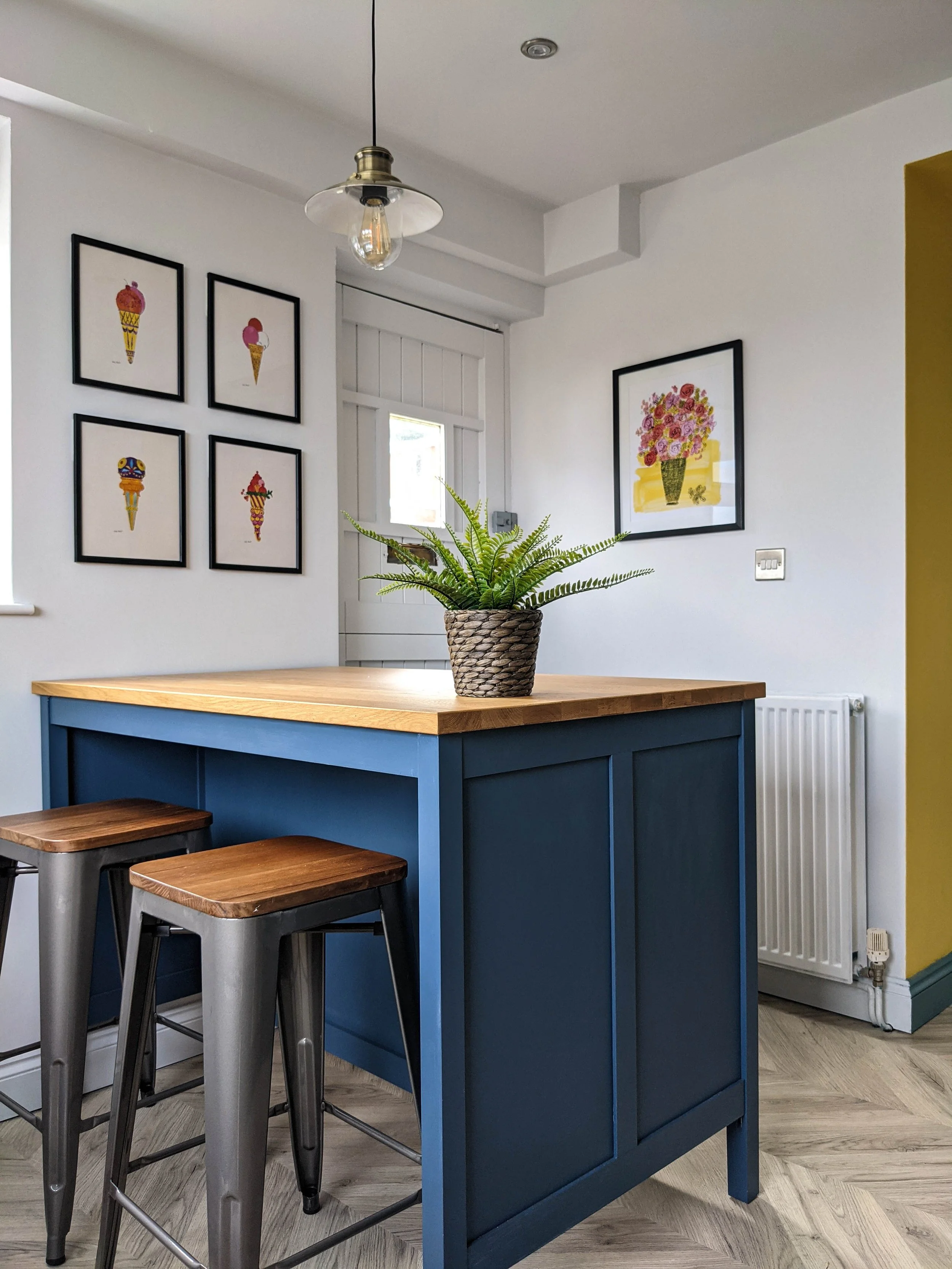
An IKEA island measuring 126cm wide against a wall, creating a useful peninsula for extra storage, worktop space and seating
The minimum gap clearance around a kitchen island is 100cm to allow for appliances to open, or 120cm if it's an oven or dishwasher. If there are two appliances opposite each other, at least 120cm is recommended. You can get away with 90cm for a walkway between the side of the island and a wall.
The benefits of a peninsula
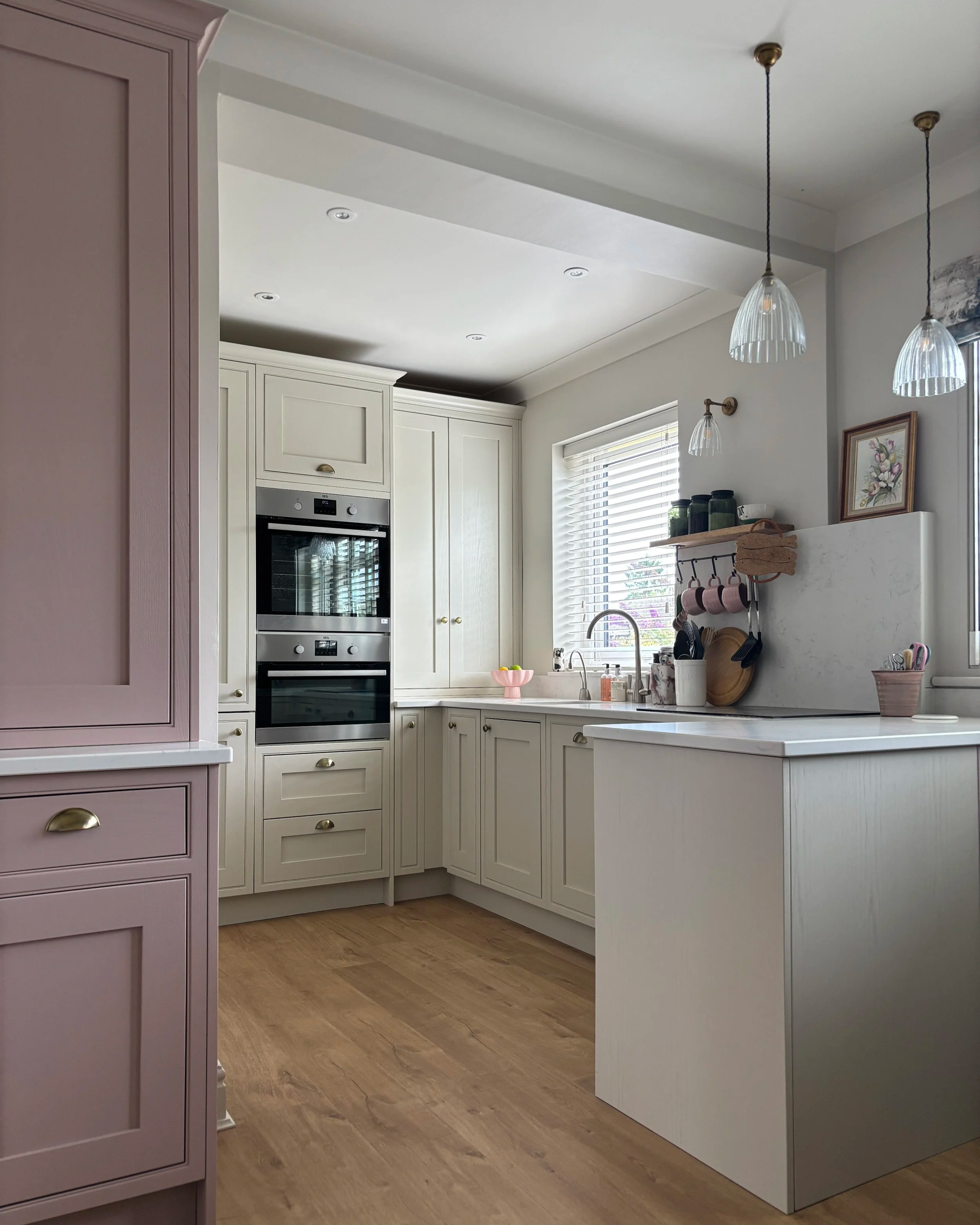
A 60cm wide peninsula at my Wakefield project
If there's not enough space for an island, peninsulas are a great option. Even adding a 60cm wide peninsula is a great way of creating extra countertop space in a small kitchen.
What to include in your kitchen
Here is a list of things you might want to consider when planning what to include in your kitchen:
Double the Bin Space
The one regret in my own kitchen is that we didn't have enough space for a second pull-out bin. With three teenage boys who don't ever seem to stop consuming, our bin is constantly overflowing - it would have been really helpful to have one bin unit for general waste and another for recycling. Instead, we have a container for recycling under the sink.
Consider Two Dishwashers
An increasing number of people these days opt for two dishwashers. If you have a large family and enough space, having two dishwashers can mean you don't need to be constantly emptying one to keep your kitchen tidy and clutterfree.
Pantry Cupboard
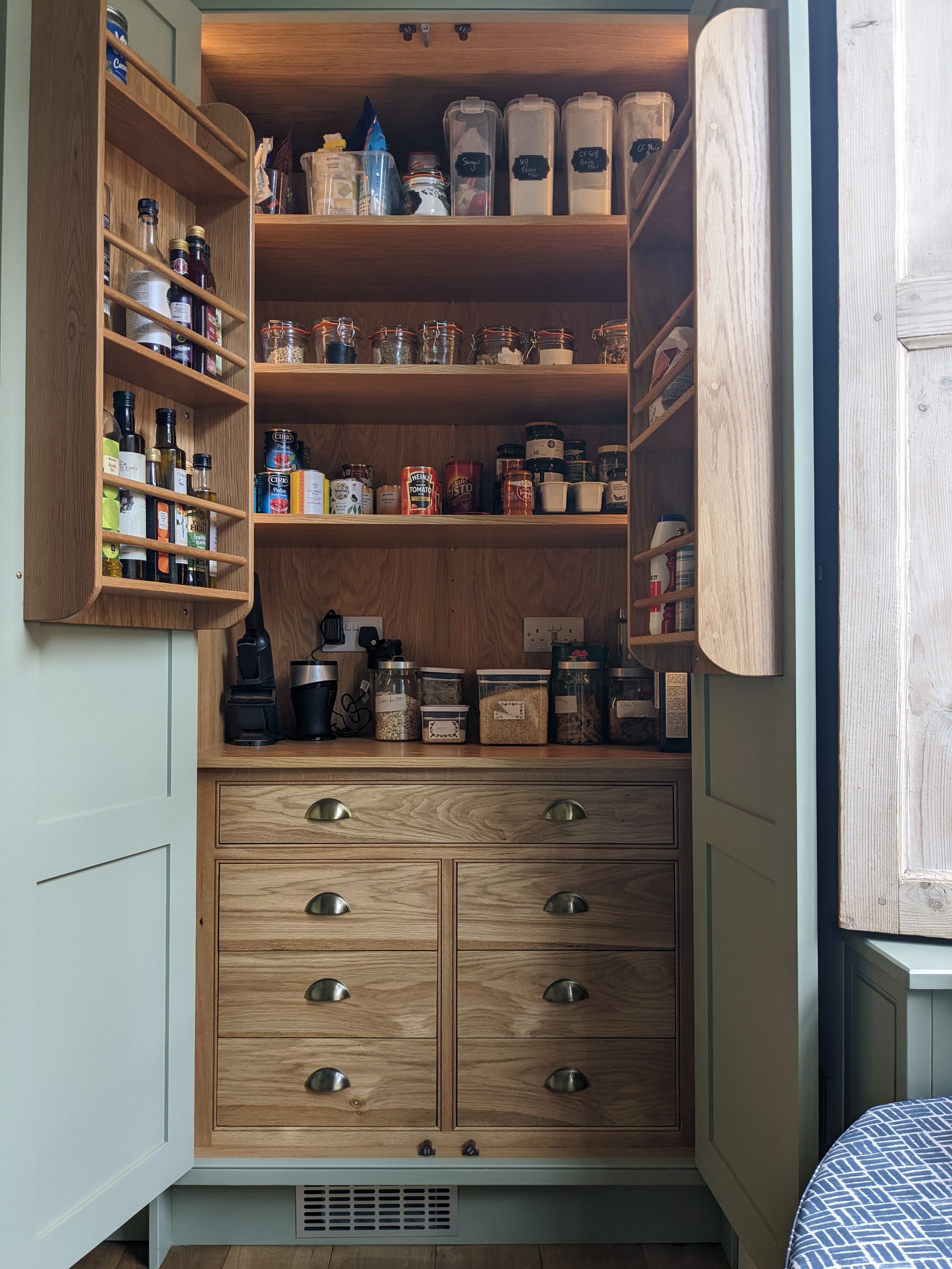
Top of many people's wishlist is a pantry cupboard. They're great for maximising food storage space and can incorporate spice racks and drawers, as well as deep and shallow shelves.
Appliance Garage
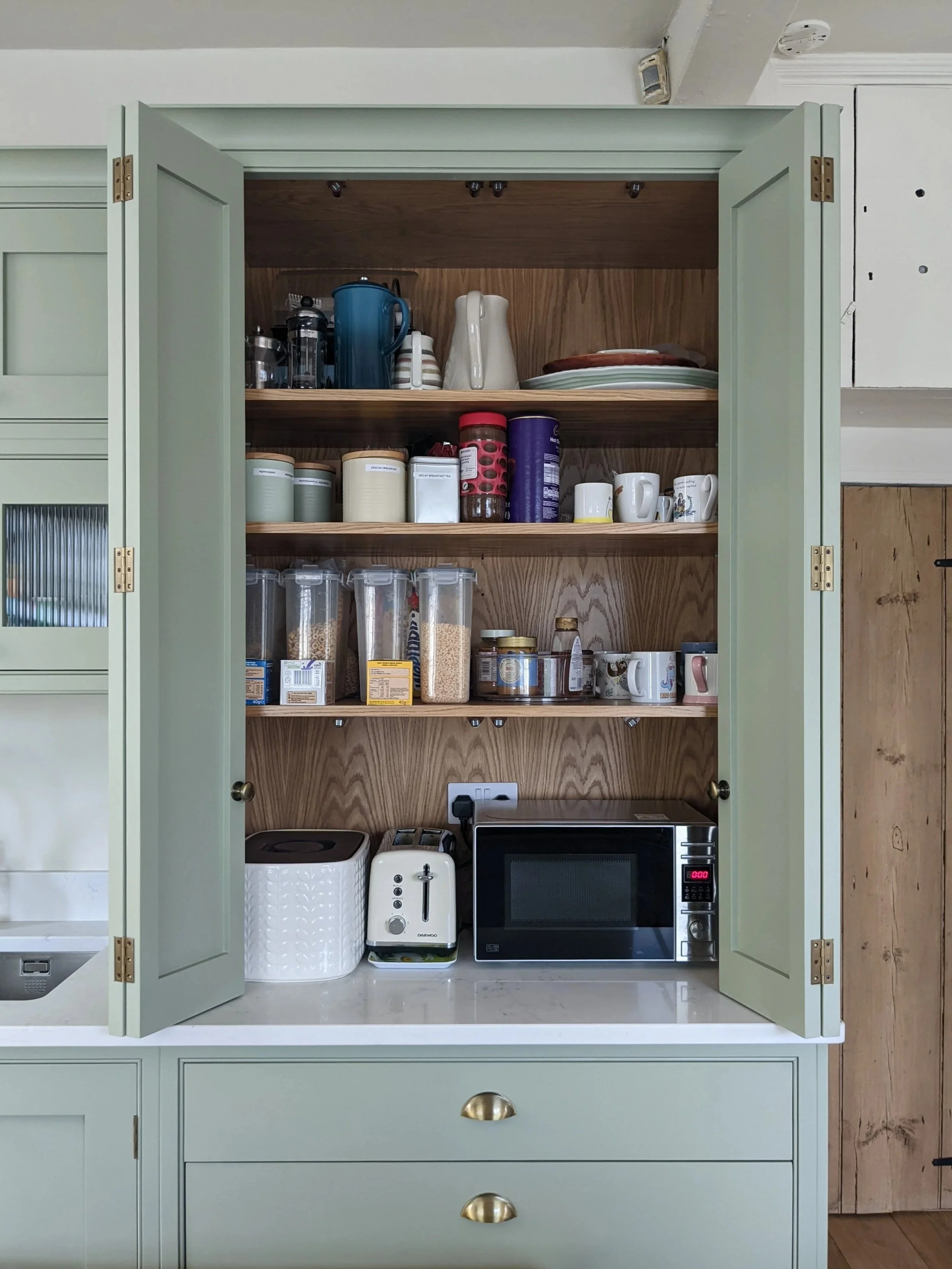
A shallower cupboard that sits on the worktop is a great place to store away small appliances like a toaster, microwave and kettle while allowing for easy access.
Pan drawers and pull out narrow larder
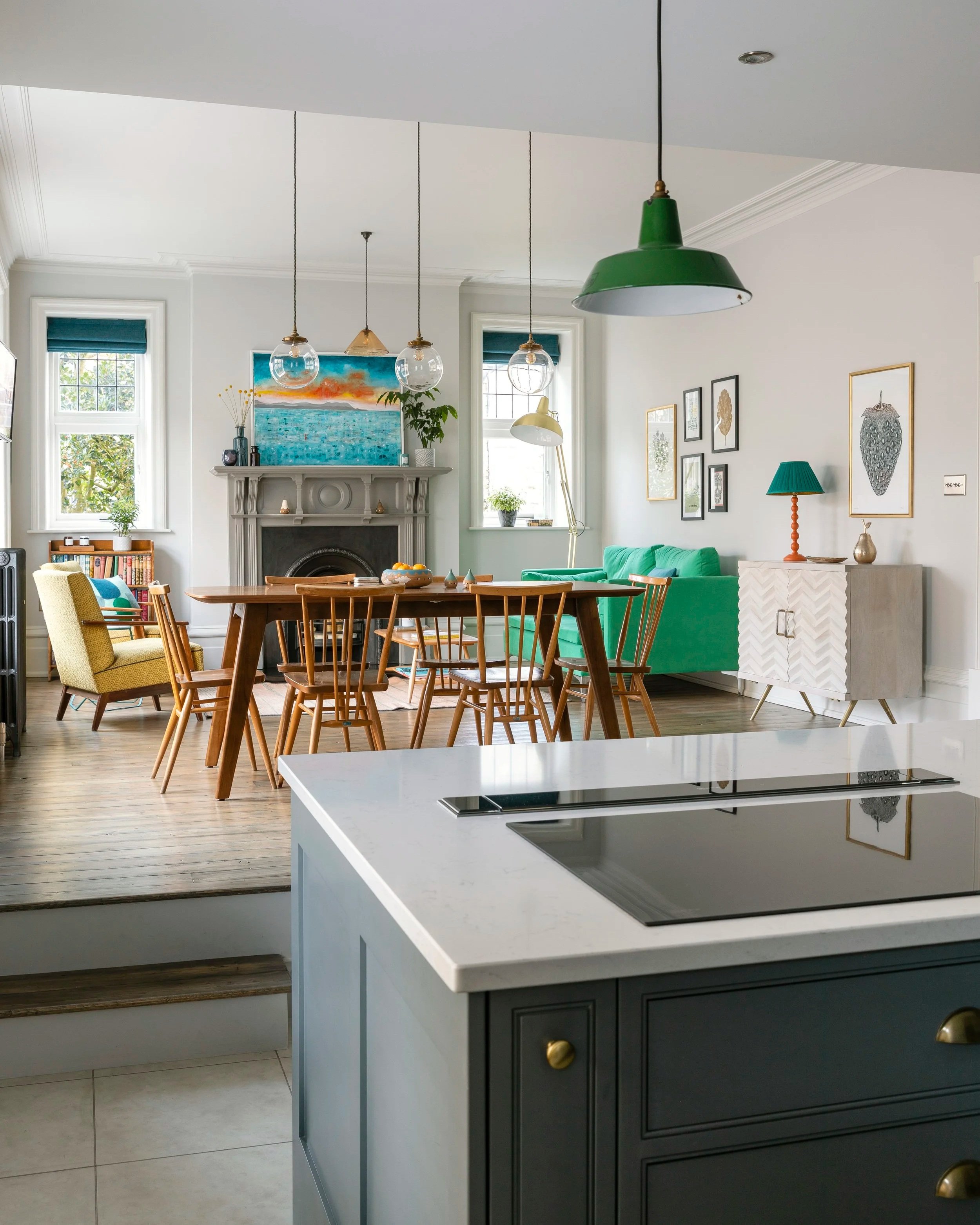
It's a great idea to add wide pan drawers underneath the hob. I usually also recommend incorporating a narrow pull out unit for spices and oils next to it.
Integrated chopping boards
We've found the integrated chopping boards to be a godsend in our kitchen and they free up cupboard space. Also consider integrated trays if they’re something you use often.
Drawers or cupboards?
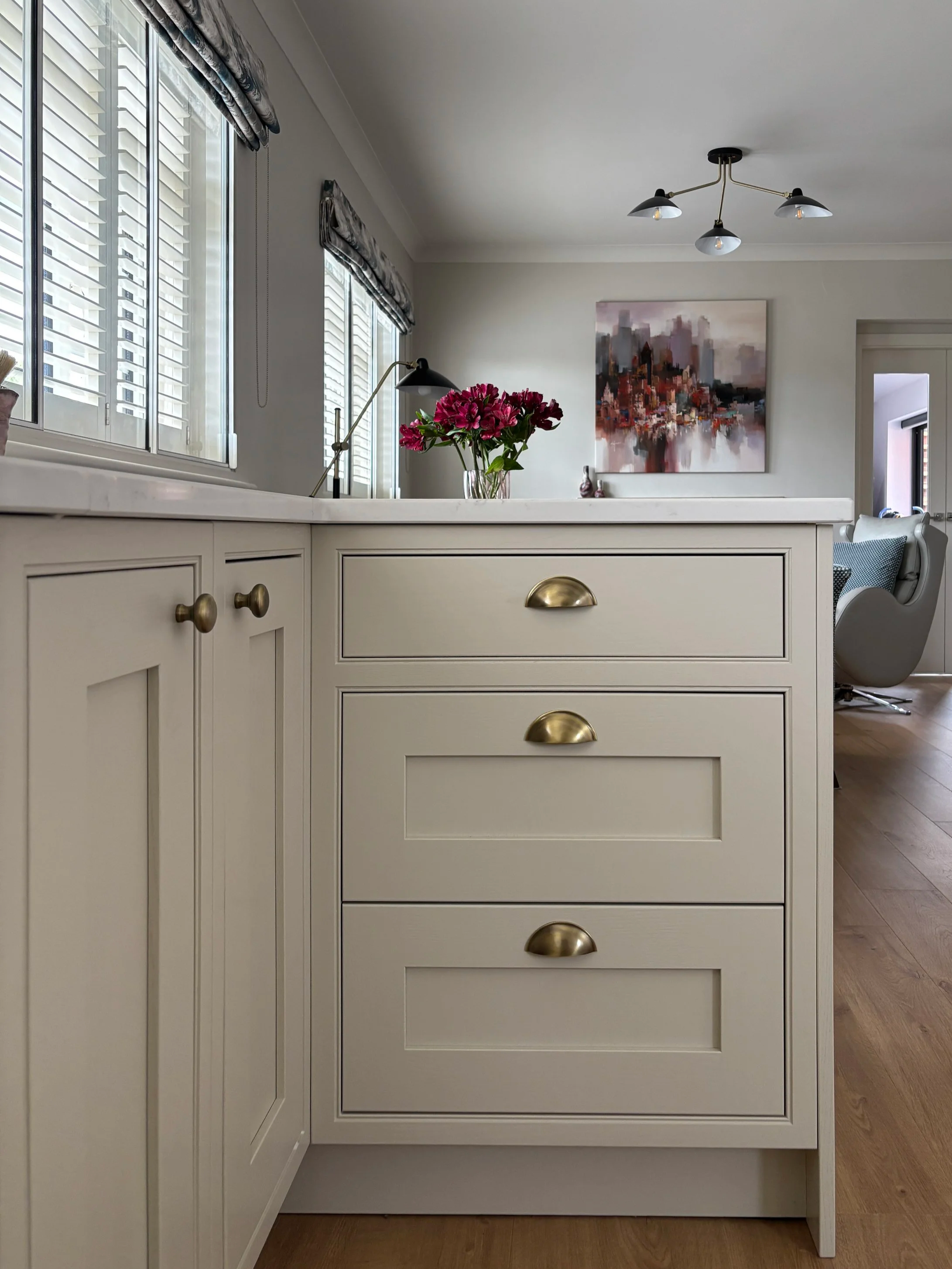
Drawers on the peninsula at my Wakefield kitchen project
Traditionally, base unit cupboards were the most popular option but now more and more people opt for drawers to enable easier access to things like plates and mugs. Just make sure that the drawer runners are strong enough. I designed a kitchen for a client a couple of years ago and she keeps her super heavy Le Creuset dishes in a drawer!
Countertop space
The biggest design mistake I find in kitchens is the lack of countertop space. It's especially important that you have sufficient space for food preparation next to the hob, and enough space to stack dirty dishes next to the dishwasher/sink. If you have an oven in a tall unit, make sure that there's worktop space nearby where you can easily put hot baking trays.
Open shelving
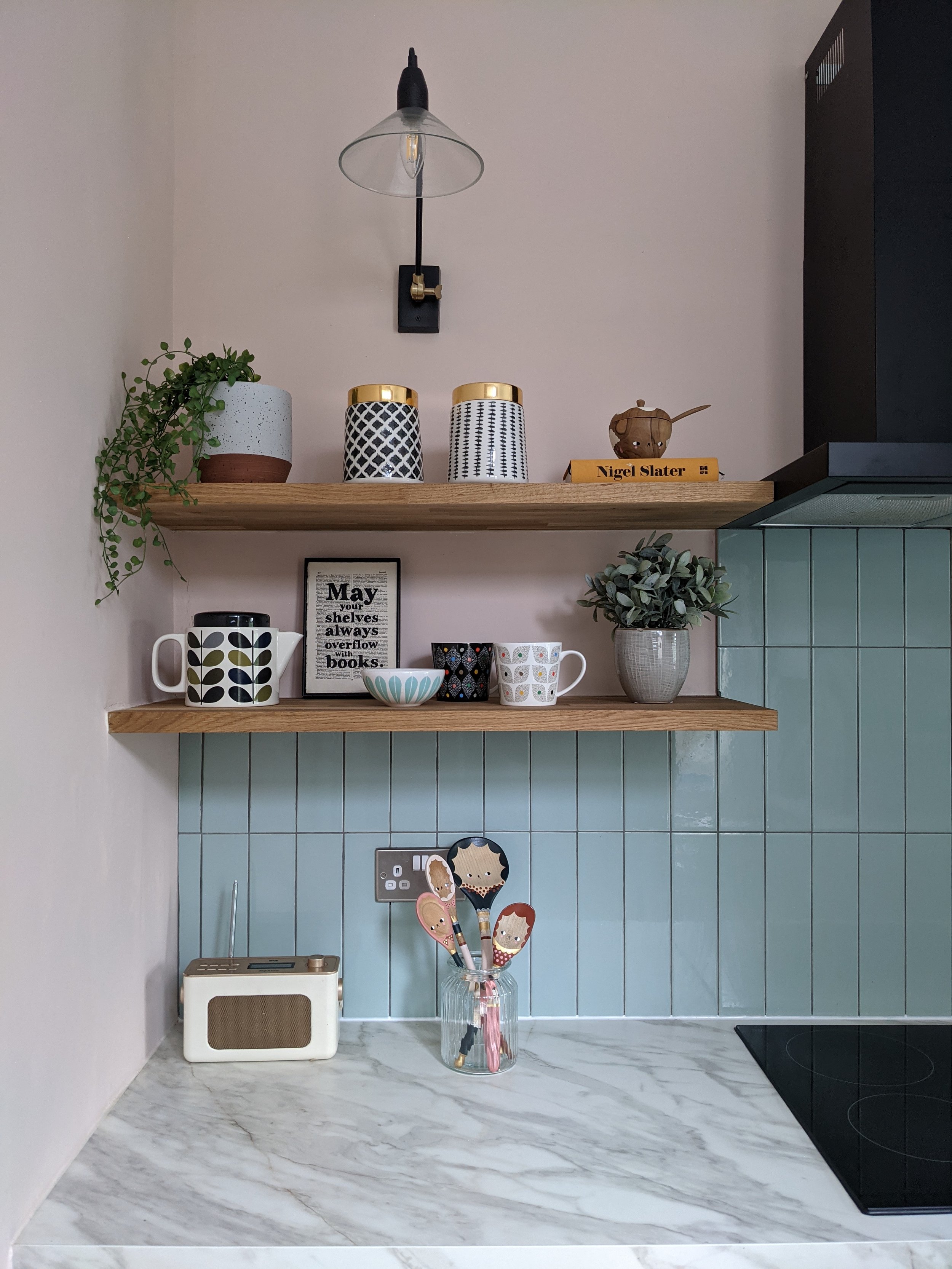
I always try to incorporate at least some open shelves - they provide a great opportunity for adding personality by displaying treasured items. A lot of my clients are a bit frightened of open shelving but if you mainly use them for cookbooks, display and things you don't access often, they'll stay tidy and clutter-free. The only things on my kitchen shelves that I use regularly are the sugar pot and the butter dish.
What should go where?
The Kitchen Triangle
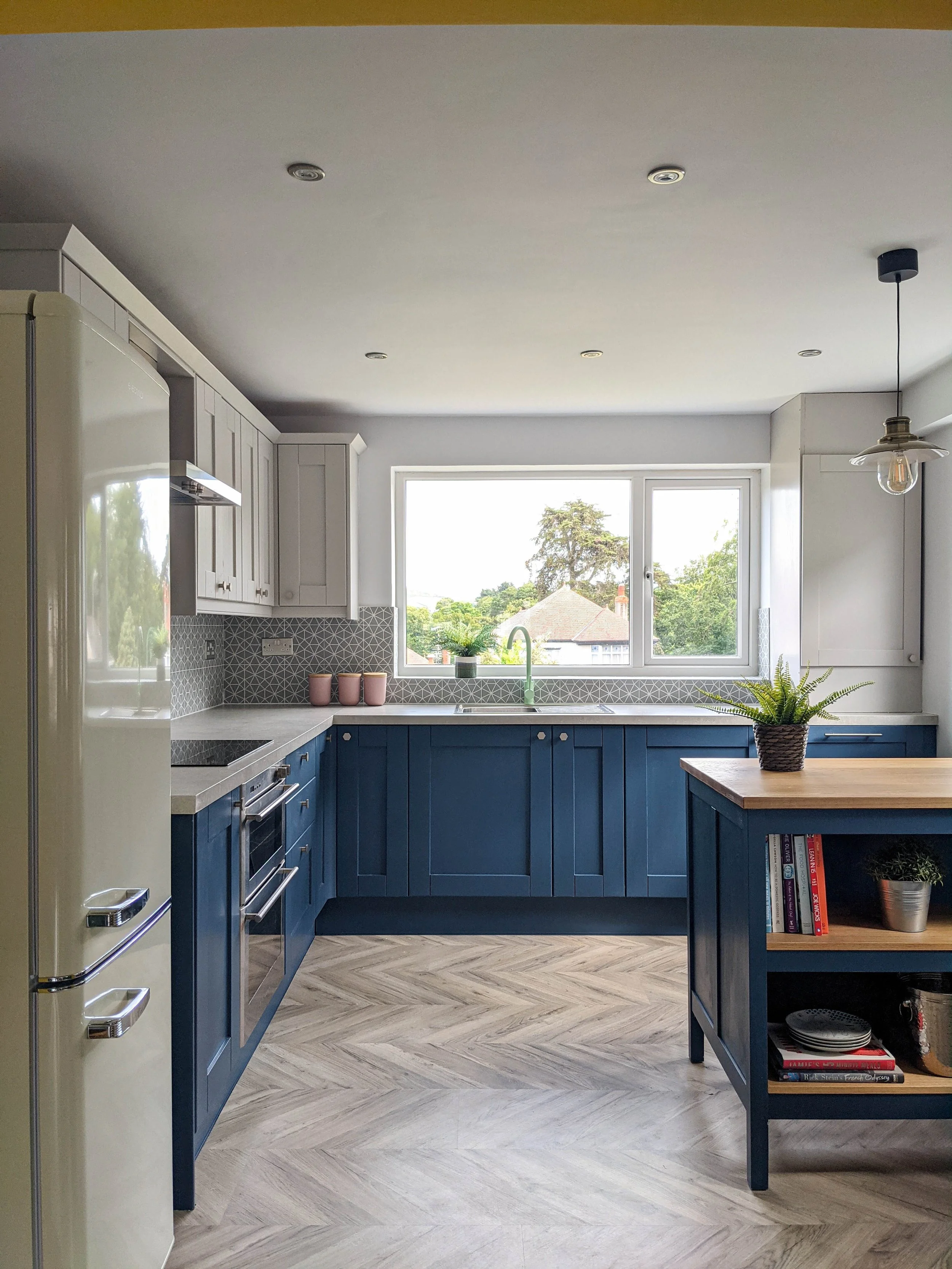
The kitchen at my North Wales project where we kept the existing kitchen and did an affordable refresh
You might have heard of the all important "kitchen triangle" which means that ideally the position of your fridge, hob and sink should form a triangular shape. Because these three items are used so often, it's important that there isn't too much distance between them - ideally around 1.2m between the hob and sink but no more than 2.4m between each workstation.
Position your dishwasher and bin next to your sink.
The idea is that you can pour any liquids down the sink or throw food in the bin before putting your dishes straight into the dishwasher. If you use a food caddy for recycling, the bin location isn't so important but you'll need your caddy within easy reach.
Locate the dishwasher at the end of a kitchen run wherever possible.
If positioned in the middle of a kitchen run, it can be a pain walking around it when it's open.
What to put on the island or peninsula
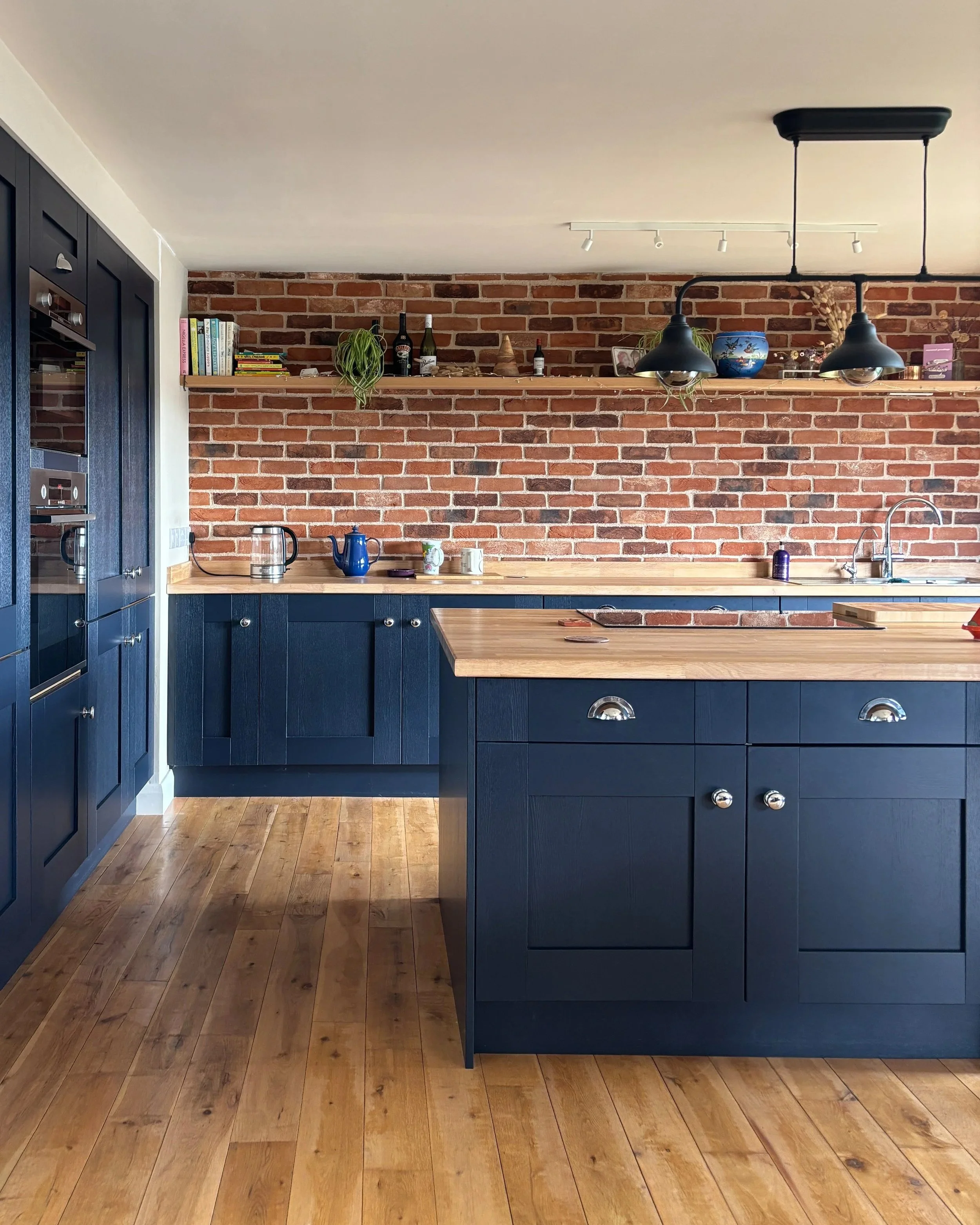
In an open-concept kitchen, positioning the hob here makes social interaction much easier. And it's definitely more interesting than staring at a wall while cooking. If you have a really long island, you might want to incorporate both the hob and sink here, with a bank of tall units behind it.
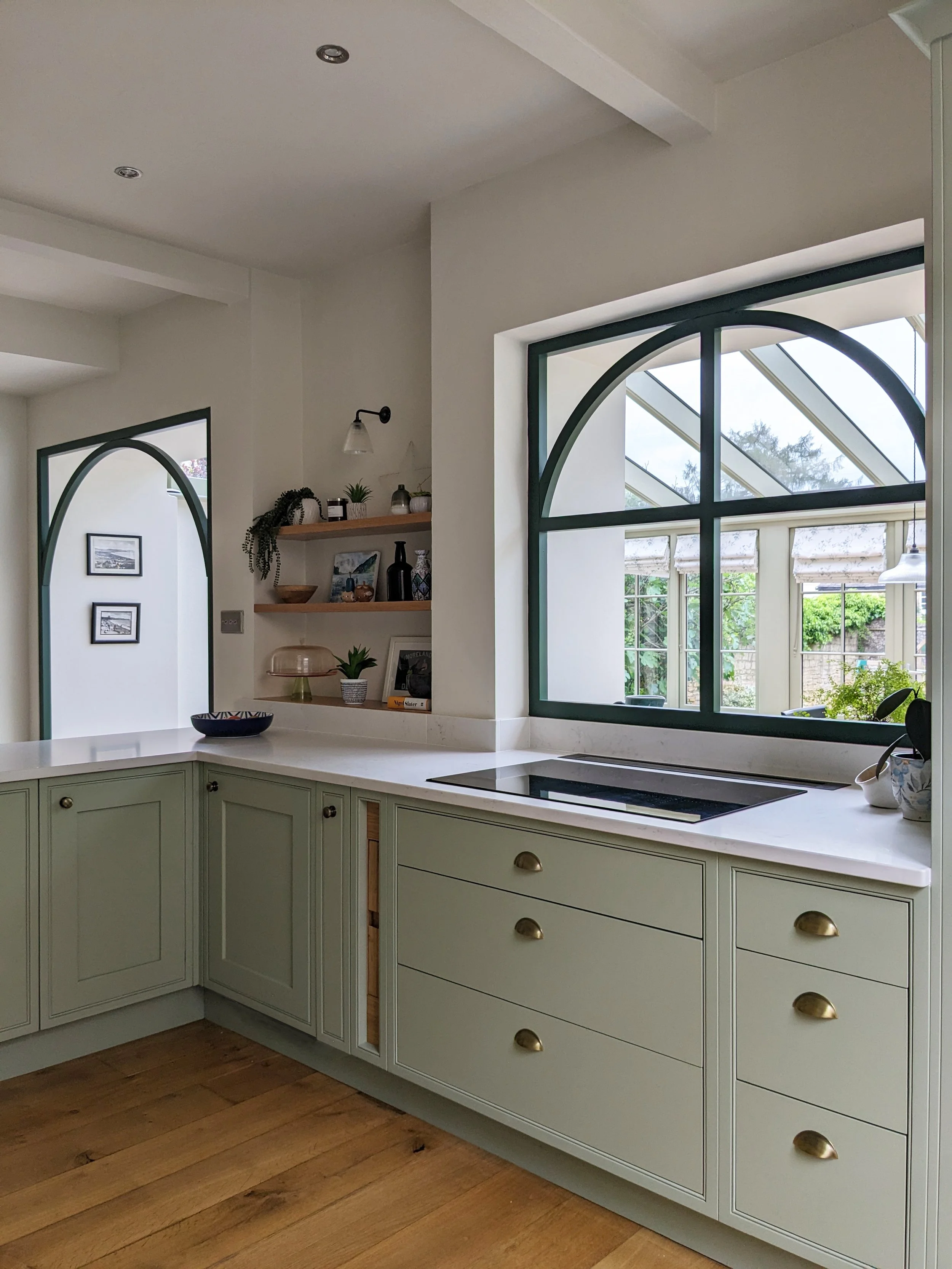
The bespoke kitchen at my Boston Spa project
Before adding a worktop overhang for bar stools, think about whether anyone will actually sit on them. If the dining table is nearby, your family members might flock to that. Do you really need two seating areas so close together? Extra storage space might be much more useful. If you do decide on bar stools, you’ll need a minimum overhang of 30cm.
Make sure you have enough light sources
Task lighting is really important in a kitchen. As well as downlights, look at incorporating pendant lights, wall lights and even a table lamp. You might find my guide on how to hang kitchen pendant lights useful.
And that's my guide to creating a well-designed kitchen! I hope you're found it useful. If you're planning a kitchen renovation and would like some help to create the perfect space, I offer online design services throughout the UK.
RELATED POSTS